
How to Declutter and Organize Your Closet Without Getting Overwhelmed
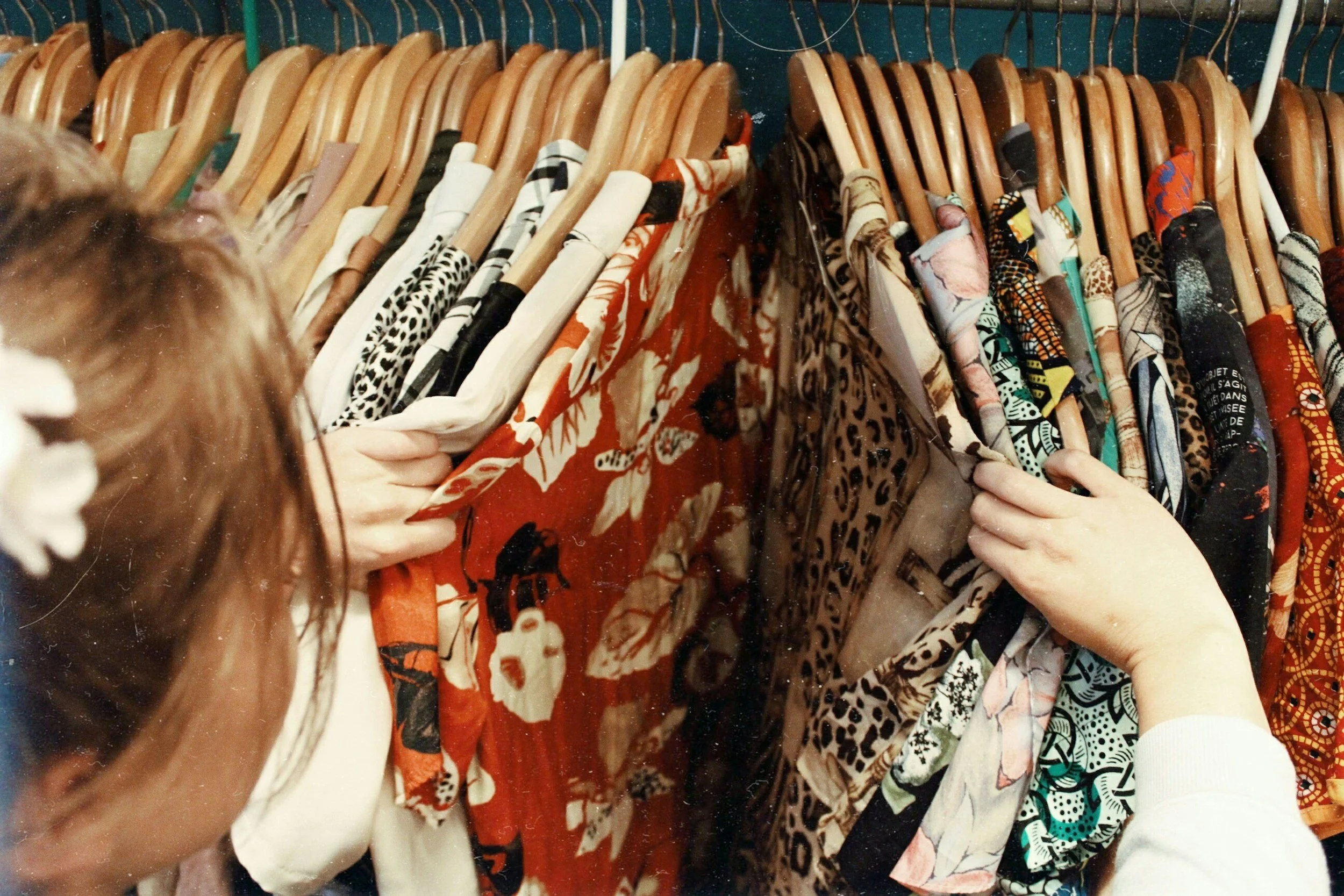
Your closet is one of the most personal spaces in your home.
You probably visit it every day. You stand in front of it when you're getting ready for work, meeting a friend for dinner, going on a date, running errands, or simply deciding what version of yourself you want to take into the world that day.
Plus, your closet can hold memories, aspirations, past identities, and clothes for a life you no longer live. It can also become a daily reminder of clothes that don't fit, purchases you regret, or the person you think you should be.
That's part of why closet organization is about more than making your clothes easier to find. So before you start buying matching hangers or pulling everything out of your closet, there's something more important to do:
Reflect on what you actually want your closet to say about your life today.
The goal isn't to have a minimalist wardrobe or reach some arbitrary number of clothing items.
The goal is to create a closet that supports the person you are now.
Before You Declutter Your Closet, Ask Yourself These Questions

Before you start sorting clothes into piles, give yourself a few minutes to reflect.
Who am I today?
This might sound like a big question for a closet, but it's actually one of the most useful questions you can ask.
Your clothing is connected to your identity. What you wear communicates something about how you see yourself and how you want to move through the world.
So look at your closet through the lens of your current life.
What do you actually do?
How do you spend your time?
How do you want to feel when you're getting dressed?
What kinds of clothes make sense for your life now?
Decluttering is largely about acknowledging and accepting not only who you are today, but that you're allowed to change, evolve, and release past versions of yourself.
What am I keeping for the memory?
Some clothing is genuinely sentimental.
Maybe it's your grandmother's jacket. Maybe it's the dress you wore on a significant night. Maybe it's something from a chapter of your life that meant a lot to you.
That's okay.
But ask yourself whether you're keeping an item because you genuinely value the memory—or because getting rid of the item feels like getting rid of the memory.
You can keep the memory without keeping every physical representation of it.
What am I keeping for a future version of myself?
This is one of the hardest categories.
The jeans you'll wear when you lose weight.
The clothes you'll wear when you get that job.
The dress you'll wear when you become more social.
The shoes you'll wear when you become the person who actually wears those shoes.
Sometimes our closets become storage units for our aspirations.
There's nothing wrong with having aspirational pieces. But if your closet is primarily filled with clothes for a life you're not currently living, it's worth asking whether those clothes are supporting you or quietly making you feel like you're falling short.
3 Tips to Start Decluttering Your Closet Today

Once you've reflected on what you want your closet to do for you, you can start the practical work.
You don't have to transform your entire wardrobe in one afternoon. In fact, starting smaller can make the process much more sustainable.
1. Don't Try Everything On
One of the biggest misconceptions about decluttering clothes is that you need to try every single item on.
You don't.
If you already know you don't like something, you don't need to put it on your body to prove it.
If you haven't worn it in years and you already know it doesn't belong in your life anymore, let it go.
If you dislike the color, fabric, style, or way it makes you feel, you already have your answer.
Only try something on if fit is the primary reason you're considering letting it go.
This can dramatically reduce the time and emotional energy required to declutter your closet.
And remember: the goal isn't to create a perfect wardrobe. It's to make decisions that feel honest and useful.
2. Get Another Person Involved
Closet decluttering can become surprisingly emotional when you're doing it alone.
You might find yourself holding a dress and remembering an old relationship. You might question whether you're "allowed" to get rid of something expensive. You might convince yourself you'll eventually wear something simply because you don't want to admit that a purchase didn't work.
Having another person there can help you get out of the loop in your own head.
That person doesn't need to tell you what to keep.
In fact, the best support isn't someone saying, "You definitely don't need that."
It's someone who can ask useful questions, help you stay grounded in the goals you've already identified, and affirm that you're allowed to make the decision that's right for you.
3. Create a Tangible Goal
"Declutter my closet" is a pretty big goal.
If your closet contains clothes from every version of you since high school, trying to tackle all of it at once can feel overwhelming before you even begin.
Instead, give yourself a smaller, tangible goal.
You might decide to:
Declutter one category of clothing.
Work on one section of your closet.
Remove 10 items you already know you don't wear.
Create one donation bag.
Spend 30 minutes on the easiest items first.
Finish one drawer before moving on to hanging clothes.
If your closet contains a lot of sentimental clothing, don't start with the most emotionally difficult items.
Start with the clothes that are easiest to make decisions about.
This gives you an opportunity to practice making decisions, experience the relief of having less, and build confidence before you move into the harder categories.
Think of it as building your decluttering muscle.
You don't have to start with the heaviest weight.
What If You Still Feel Paralyzed to Take the First Step?

If you've started decluttering before and found yourself crying, stuck, second-guessing everything, or putting nearly everything back, that doesn't mean you're bad at organizing.
It may simply mean there's more happening than a simple "keep or get rid of it" decision.
Your belongings can represent memories, relationships, money, identity, grief, hopes, fears, and past versions of yourself.
That's why I don't believe closet organization should be about forcing yourself to get rid of more.
It's about creating enough space—physically and mentally—to make decisions that actually reflect your life.
You don't need to become a minimalist.
You don't need to have a capsule wardrobe.
You don't need to get rid of something just because someone on the internet says you should.
You need a closet that works for you.
When It Makes Sense to Hire a Professional Organizer
Sometimes you don't need more organizing tips. You need hands-on support from someone who can help you actually do it.
Hiring a professional organizer can be especially helpful if:
You've been meaning to declutter your closet for months or years.
You feel emotionally attached to a lot of your clothing.
Your closet represents multiple chapters of your life.
You're going through a life transition such as a move, divorce, career change, empty nest, or major lifestyle change.
You struggle with decision-making or chronic disorganization.
You become overwhelmed when you have too many choices.
You've tried decluttering before but couldn't maintain the changes.
You want support without someone judging you or telling you what you're "supposed" to keep.
You simply don't have the time or energy to tackle the project yourself.
As an Austin-based professional organizer, I don't come into your home with a predetermined number of items you're allowed to own.
My approach is psychology-informed, practical, and shame-free.
We'll look at what's actually making your space difficult to use, identify the systems that fit your life, and make decisions at a pace that feels manageable.
And you don't have to know exactly what you need before reaching out.
Start With a Free Consultation
Every in-person organizing project starts with a free consultation.
We'll talk about what's frustrating you, what you'd like to change, and what kind of support would actually be useful. From there, we can determine whether working together makes sense and what your project might look like.
You don't have to figure out the entire process before you ask for help.
If your closet is full of clothes from past versions of yourself, maybe you don't need more storage.
Maybe you need permission to make space for who you are now.
