
Why Spring Cleaning Doesn’t Work (Until You Break Your Clutter Cycle)
Every spring, millions of people decide it’s time.
Closets get emptied.
Donation piles appear.
Pantries get reorganized.
For a moment, everything feels fresh and manageable. But a few months later… the clutter slowly creeps back.
If that sounds familiar, the problem probably isn’t spring cleaning. The problem might be a clutter cycle.
After years of working as a professional organizer, I’ve noticed something important:
Clutter rarely happens randomly. It follows predictable patterns of behavior.
Once you identify the pattern you’re in, organizing becomes dramatically easier.
Here are seven clutter cycles I see most often — and how to break them. You may recognize yourself in one (or several).
1. The Busy Professional Cycle

What it looks like
You’re working hard and feeling tired.
You reward yourself with purchases.
Packages arrive.
You’re still busy and exhausted — so nothing gets organized.
Over time, unopened boxes, impulse purchases, and decision fatigue turn your home into another source of stress.
How to break this cycle
Create a “processing station.” Every home needs one place where new items land before they enter the house.
For example:
• a small table by the door
• a basket in the laundry room
• a dedicated shelf in a closet
Once a week, spend 10 minutes processing that space.
Ask:
Do I actually want this?
Where will it live?
Does something need to leave to make room?
Small weekly decisions prevent overwhelming clutter later.
2. The Extracurricular Cycle

What it looks like
This cycle begins with inspiration.
You see:
• a hobby a friend started
• a fun activity on a trip
• a creative project online
You think:
“I want to do that.”
So you buy the equipment. Bread-making supplies. Camping gear. Sports equipment. But the hobby never becomes part of your routine.
How to break this cycle
Use the “trial before tools” rule.
Before buying anything, ask:
“Can I try this without buying equipment?”
Examples:
• borrow supplies
• take a class
• rent gear
• commit to doing the activity three times first
If you’re still excited after trying it, then invest in the tools.
This prevents hobby clutter from building up.
3. The Over-Giver Cycle

What it looks like
Some clutter appears because people give their energy to everyone else.
The pattern often looks like this:
Saying yes to everything
No energy left for yourself
Packages pile up
Laundry stays unfolded
Items never find homes
In this cycle, clutter isn’t caused by laziness. It’s caused by capacity. When your time and energy are constantly going outward, there’s nothing left to maintain your space.
How to break this cycle
Practice saying no before your home says it for you. Clutter often becomes the physical signal that your schedule is overfilled.
Instead of trying to organize more, start by protecting your time.
A few helpful rules:
• Pause before committing to new requests
• Replace automatic “yes” with “Let me check my schedule.”
• Choose one or two priorities instead of five
When you reclaim your time and energy, it becomes much easier to care for your space. Organizing works best when your capacity and your commitments match.
4. The Life Transition Cycle
What it looks like
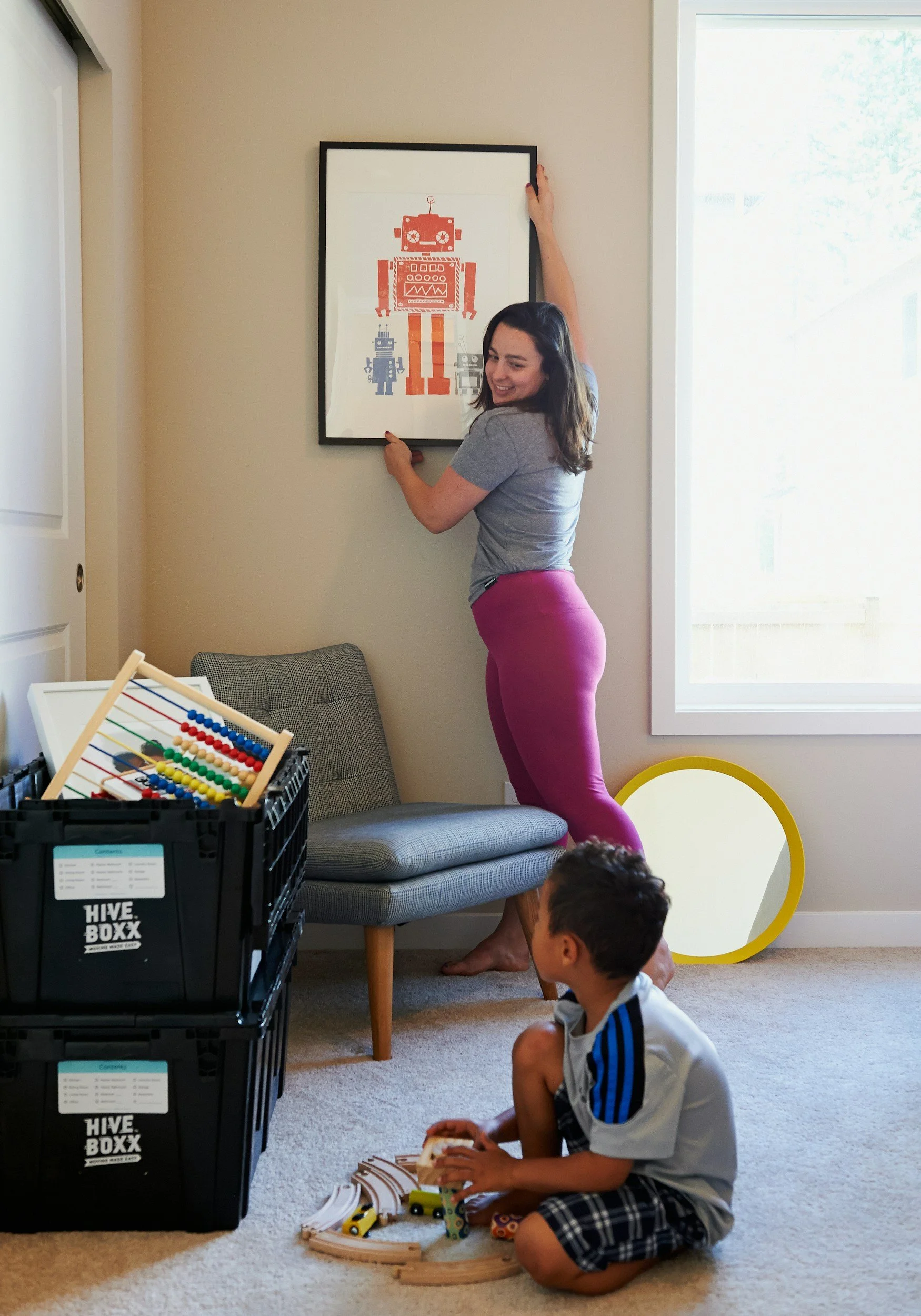
Major life changes often trigger clutter.
Examples:
• moving
• divorce
• job change
• grief or loss
• new schedules
During these seasons, it’s common to think:
“I’ll deal with it later.”
“Maybe tomorrow.”
“I’m too tired.”
Clutter compounds because your baseline capacity is lower.
How to break this cycle
Lower the organizing bar temporarily. Instead of perfect systems, focus on containment systems.
Examples:
• categorized piles
• temporary donation baskets
• “decide later” boxes
Containment keeps clutter manageable until your life stabilizes.
5. The Generational Drop-Off Cycle

What it looks like
Someone in the family frequently drops things off:
Childhood boxes.
Holiday decorations.
Hand-me-downs.
Often with little warning.
Because it keeps happening, nothing ever truly gets decluttered.
How to break this cycle
Create a “drop-off boundary.”
Designate one specific container for incoming items.
When that container fills, something must leave.
You can also say:
“I’d love to look through it together first, so I only keep what I’ll truly use.”
Boundaries protect your space.
6. The Family Archivist Cycle
What it looks like
This cycle often begins after a loved one passes away. You suddenly inherit belongings filled with memories.
You feel:
• responsibility
• sentimentality
• pressure to preserve everything
Over time:
Closets fill.
Cabinets fill.
Your mental space fills.
How to break this cycle
Curate, don’t keep everything. Preservation doesn’t mean keeping every item.
Instead:
• choose a few meaningful pieces
• photograph sentimental objects
• create one memory box
This allows you to honor the memories without storing an entire lifetime of belongings.
7. The Re-Gifter Cycle

What it looks like
You’re someone who loves finding thoughtful gifts.
While traveling or shopping, you think:
“This would be perfect for someone.”
So you save it.
But over time:
• you forget what you bought
• you buy more gifts
• items accumulate
How to break this cycle
Create a designated gift bin. One container. That’s it. When the bin fills, stop buying gifts until some are given away.
Why Understanding Your Clutter Cycle Changes Everything
Most organizing advice focuses on what to do with stuff. But real change happens when we understand why clutter appears in the first place. When you identify your clutter cycle, you can create systems that:
• fit your real lifestyle
• prevent clutter from returning
• reduce daily decision fatigue
Organizing becomes less about discipline and more about designing a home that supports your life.
What If Spring Cleaning Actually Lasted All Year?
Imagine if instead of organizing the same spaces every year, you created systems that lasted.
That’s exactly what my Virtual Reset Sessions are designed to do.
In a Virtual Reset, we work together to:
• identify your clutter cycle
• declutter strategically
• design sustainable organizing systems
• create realistic habits that keep clutter from returning
The goal isn’t perfection. It’s a home that supports your energy, your schedule, and your peace of mind.
Ready to Break Your Clutter Cycle?
If spring cleaning hasn’t worked in the past, it doesn’t mean you failed. It probably means you were trying to organize without addressing the cycle behind the clutter. A Virtual Reset Session helps you break that cycle for good.
It all starts with a free, no-strings-attached consultation. Book your free consultation today!
